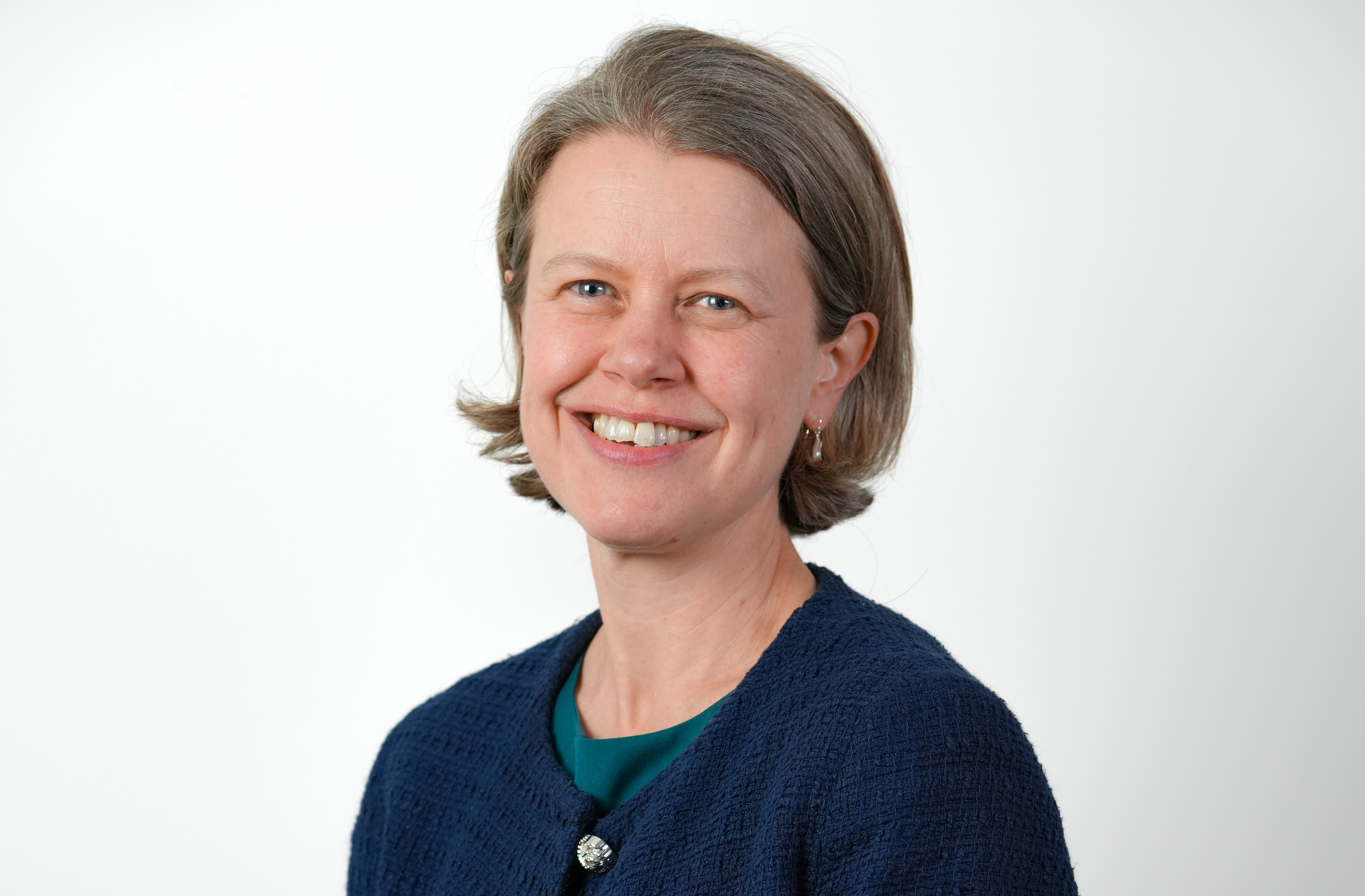
PACE blog – reflections on session two 'Why systems matter to place leaders' from Liz Hunter
2026 Cohort - session two - Working on the system: why systems matter to place leaders
The fourth year of ADEPT and Amey’s innovative Pioneering, Action-orientated, Creative and Entrepreneurial (PACE) programme is well underway and here Liz Hunter, Interim Executive Director, Transport for West Yorkshire Combined Authority reflects on the second session of the 2026 PACE programme. Held at Keele University, the session explored why systems matter to place leaders, using the energy transition to examine how leaders can understand complex relationships, competing interests and their own role in bringing people together.
Making space to think
I was unable to attend the first PACE session, so our cohort’s second session at Keele University was my first opportunity to properly immerse myself in the programme and spend time with the rest of the cohort. I had read Ann Carruthers’ reflections on session one and had heard very positive feedback particularly about the excellent speakers and the time built into the programme for discussion and reflection.
Having now experienced that for myself, I can understand why place leaders value this programme and the benefits it offers.
One of the reasons I wanted to take part in PACE was the opportunity to learn alongside people working in similar leadership roles, particularly colleagues from local authorities outside West Yorkshire. As a combined authority, we work very closely with our local authority partners and understanding the challenges facing people in comparable roles elsewhere gives me a different perspective on the challenges facing colleagues closer to home.
There is another, deceptively simple benefit to the programme too. PACE creates space.
We are all busy. We have significant remits and portfolios to deliver on and there is rarely enough time in the working day to think beyond the immediate to do list and what needs to happen next. But sometimes you must actively create the opportunity to step away, think differently and consider the bigger picture.
PACE gives us the chance, the space and the resources to do that.
Understanding the system
The theme for session two was Working on the System: Why Systems Matter to Place Leaders, using the energy transition as a practical way of exploring what systems leadership really means.
It was a particularly useful subject because energy connects with so many aspects of place. Economic growth, housing, infrastructure, investment and climate ambitions all depend on systems that no single organisation controls.
The three speakers approached this from very different positions. Professor David Healey from Keele University talked us through how the energy system works and why it is changing, drawing on Keele's own experience of developing its Smart Energy Network Demonstrator. Neil Rutledge from Amberside Advisors explored what makes energy projects investable, while Emma Fletcher from Octopus Energy offered the perspective of an organisation prepared to challenge established ways of doing things.
Having the speakers with us throughout the morning added enormously to the discussion. They questioned each other as well as responding to us, so we were able to hear different perspectives interacting rather than simply listening to three presentations in succession.
As always with the PACE programme sessions the venue was an important part of our learning and discussion too. After hearing from David, we were able to visit Keele's Smart Energy Network and see what he had been describing in practice.
Energy can feel quite abstract. Seeing the system working, even when much of what you are looking at is represented on computer screens, made it tangible. It also demonstrated what can happen when somebody succeeds in bringing the right people together around a shared purpose.
Different perspectives, common lessons
One thing that struck me was how transferable much of the discussion was beyond the topic of energy. Neil's presentation focused on what investors need if they are going to commit to projects: confidence, certainty, a robust pipeline and a clear understanding of where risk sits and where returns will come from.
The energy system has its own complexities and its own players, but many of those principles apply equally to other forms of infrastructure investment. It prompted me to consider what we already know from other sectors and how we can apply that learning elsewhere.
Emma's contribution prompted a different set of questions. Octopus Energy has developed a culture where people are given considerable freedom to experiment, try things and find different ways of working. That inevitably feels very different from the public sector, where we work within governance, procurement and accountability frameworks, for very good reasons.
But innovative organisations may be exactly the partners we need within increasingly complex systems. The challenge is understanding how organisations with very different cultures, processes and incentives can work effectively together.
That question has stayed with me.
Understanding interests and incentives
Perhaps my strongest reflection from the day was the importance of understanding what motivates everybody within a system. Organisations can all want a successful outcome without necessarily defining success in the same way. There may be competing priorities between organisations and within them. Understanding those interests is critical if we want to bring people together around a shared ambition for a place.
The session gave us a useful framework for doing that and Nigel Riglar asked us to consider five key questions:
- What outcome are we trying to create?
- Who influences that outcome?
- What incentives drive them?
- Where are the bottlenecks?
- Where can place leadership add value?
None of those questions is necessarily new but bringing them together creates a valuable discipline for thinking through a problem. It also shifts the focus away from individual projects.
Rather than beginning with what we want to deliver, we can begin with the outcome we are trying to achieve and consider the whole system around it. Who needs to be involved? What matters to them? Where are the tensions? What can we influence and where can our role as place leaders make the greatest difference?
Sometimes leadership is less about pulling a particular lever and more about convening, aligning and creating the conditions for other people to act.
Asking different questions
I have already found myself applying some of that thinking back at West Yorkshire Combined Authority.
We are developing formal relationships with organisations including the rail industry and National Highways. These partnerships naturally include practical commitments about what we want to do together, such as developing shared investment pipelines.
Since Keele, I have been thinking more about what sits around those individual relationships, rather than simply asking what we can deliver together. I want to explore how those partnerships can help us influence the wider system. Do we have a sufficiently clear understanding of our shared objectives? What are the interests and incentives of the different organisations involved? Could we achieve more collectively by looking beyond individual bilateral relationships? I cannot point to a document or project that changed overnight because I attended PACE. The impact is subtler than that, but potentially more significant.
The value of the room
For me, this is where the real value of PACE is emerging.
It is the combination of excellent speakers, carefully chosen spaces and, crucially, the time to talk about what we have heard with people facing comparable challenges.
Having colleagues from local authorities, combined authorities and central government around the same table means we inevitably see the same issues through different lenses. Sometimes somebody else has approached a problem differently. Sometimes you discover that somebody at the other end of the table is grappling with almost exactly the same thing that you are. Both are useful and offer valuable opportunities to learn and support each other.
The afternoon sessions at Keele gave us time to work through what we had learned about systems and then ask what that meant for us as place leaders. That time to discuss, challenge and reflect is difficult to replicate in everyday working life.
However long you have been in leadership, there is always something to learn from other people's experiences. Sometimes it is a genuinely new idea. Sometimes it is a reminder of something you already knew but had stopped consciously applying. Both can change how you approach the day job.
Looking ahead to session three
Our next PACE session will turn to trust and the mandate to shape place, which feels like a natural progression from the conversations at Keele.
Trust in public institutions cannot be assumed. People judge us through their experiences of public services and the places in which they live, while devolution is creating new relationships between national government, combined authorities, local authorities and communities.
As a combined authority, our relationship with the people of West Yorkshire is different from that of our constituent local authorities. We have different responsibilities and different ways of influencing outcomes. Understanding where trust sits within that evolving system and how we build and sustain it is something I am particularly interested in exploring with the group.
After my first full PACE session, I am also beginning to appreciate how the programme builds from one conversation to the next.
It is not just about acquiring more knowledge or finding an immediate answer to a particular problem. It is about creating the room, space and time to look at familiar challenges differently, test your thinking with others and then take those questions back into your own organisation.
For busy place leaders, that opportunity is incredibly valuable.
Further information
This joint venture between ADEPT and Amey is designed to provide thought leaders with the space to find strategic solutions that are Pioneering, Action-orientated, Creative and Entrepreneurial (PACE). Designed exclusively for place directors and senior leadership, two of the fundamental principles behind PACE is to influence the future of place-focused strategies and support place leaders in driving change.
- Session summary - read the full document from session two
- Video - watch the video from the second session
Other resources
- PACE - The Place Leaders Programme
- Amey
- You can find summaries from previous cohorts of the PACE programme here
Author
Liz Hunter is Interim Executive Director, Transport for West Yorkshire Combined Authority